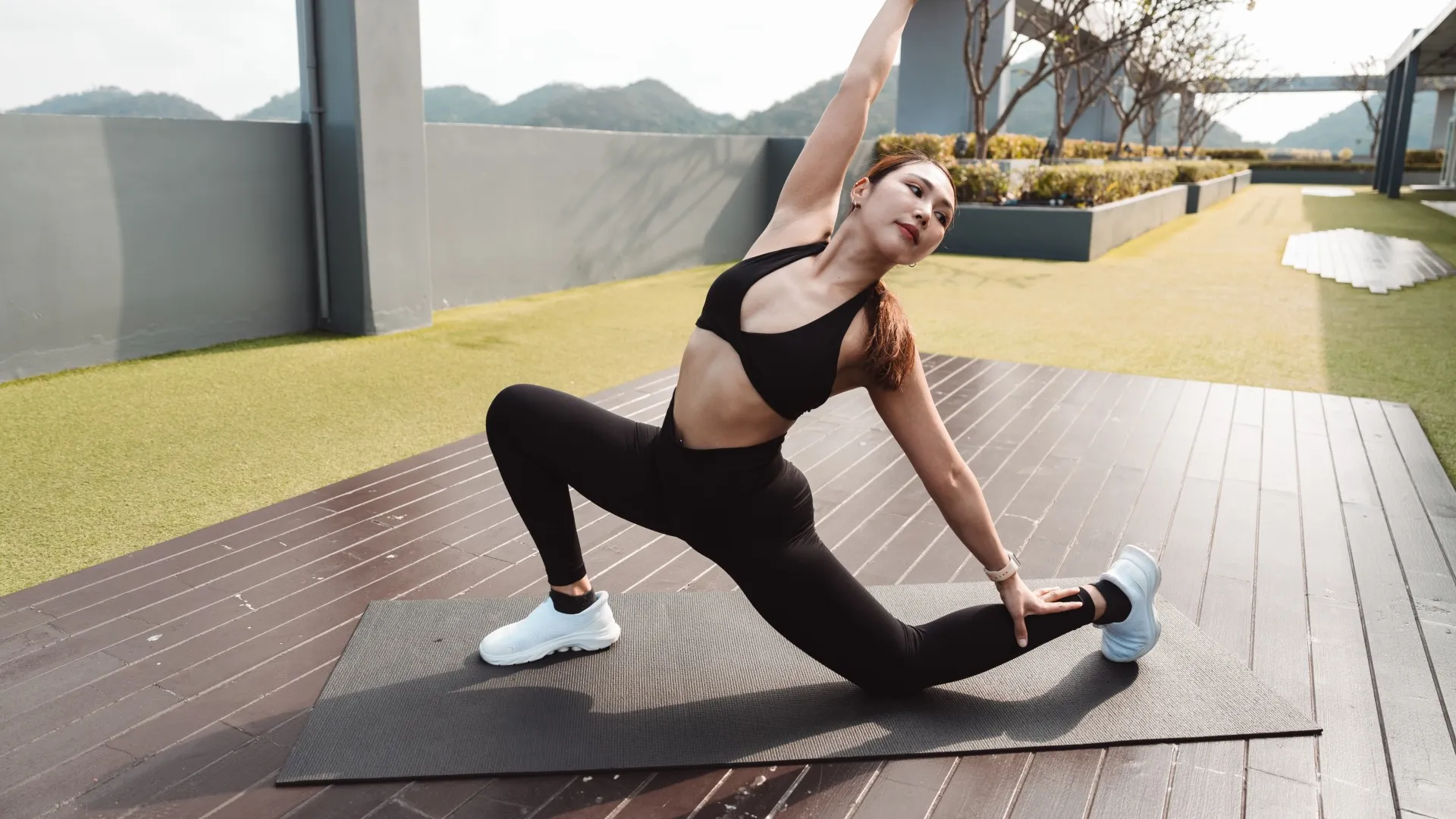
I find it rewarding when people tell me the mobility classes I teach are challenging. They shouldn't feel "easy" or "simple," even if you are performing seemingly easy and simple movements.
Building flexibility, range of motion and strength should challenge your body. After all, adaptation doesn't come from repeatedly performing the same tasks at the same intensity; it comes from repeating the same (or similar) tasks at an increasing volume or intensity.
Not long ago, I had a client start turning up to my online mobility classes, and he said he couldn't believe how much harder it felt than "just stretching." That's why I focus a lot more on dynamic stretching and mobility exercises that prime the body for exercise and everyday life. It's about combining strength, balance, control and stability, moving your body and increasing range of motion.
Below, I share a quick three-minute routine you can use in the morning or before exercise using just one of the best yoga mats.
If you experience pain at any time, stop and rest. If you're working with an injury or health condition, or you're currently pregnant or postnatal, I recommend seeking advice before starting these exercises.
Watch: Your next dynamic warm-up
The routine: 60 seconds x 3 moves. Add rounds if you prefer.
- Single-leg glute bridges: Lie on your back with your feet hip-width apart, feet down and knees bent. Lift one leg into the air and extend it away from you. As you exhale, lift your hips into the air, keep them parallel to the ceiling, and squeeze your glutes as you extend upward. Pause at the top, pressing through your working foot, then slowly lower with control. Avoid arching your lower back or rotating to one side. Switch sides. Why? Glute bridges strengthen your glutes and lower back while activating your core and focusing on single-sided motion. This is also an anti-rotation exercise, which builds stability.
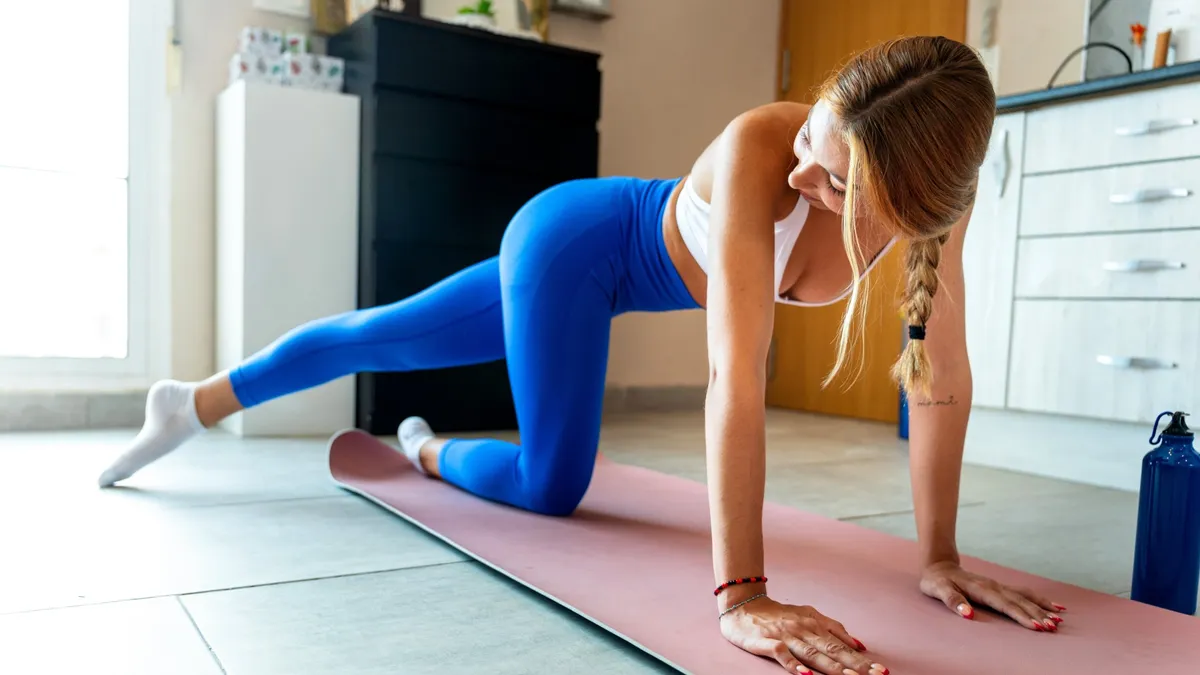
- Clamshell x knee drives: Lie on your side, elbow down and hips and knees stacked. Add a band just above your knees. Press through your forearm to lift your underside away from the ground. Place your other hand on your hip. Open your top knee toward the ceiling as far as you can while keeping your inner feet together. Next, drive your top knee upward toward you. Reverse the movement down. Remember to switch sides. Why? Clamshells target the outer glutes, or the gluteus medius, while knee drives target the hip flexors. Your side body and shoulder are helping stabilize your upper body while your lower body moves against resistance.
- Seated knee drives: Sit with your legs in front of you. Come down onto your elbows with your back straight and gaze ahead. Draw a knee toward your chest with control, pause, then slowly lower the leg again. Alternate legs. Add a small loop band around your feet for added intensity and resistance. Why? Your hip flexors assist in lifting your legs, so activating and strengthening them will benefit walkers and runners.
What are the benefits?
Single-leg glute bridges are useful for focusing on your left and right sides independently. I would also use them with clients to teach anti-rotation and control. The lower you lift your leg, the more your core and hips must work.
Clamshells are an outer gluteal exercise, which means they strengthen the muscles that assist with lateral abduction, like lifting your leg to the side. Coupled with the knee drive in a side-on position, you'll work your waist and hips at the same time.
Knee drives activate the muscles used for lifting the knees, as you would when running or climbing. Using a band is particularly useful, as your muscles must move against the force to produce movement. I find this supportive exercise helpful if I have been sitting at a desk for too long during my working day. Control these movements and start with your bodyweight before adding bands or weights.
Focus on finding length through your spine and keep your chest proud. If you struggle to engage your core properly during workouts, learn this 5-minute bracing routine first.
Finally, my stretch to avoid: static hamstring stretches. Before a workout, big hike, or walk, I always recommend dynamic movement in the joints and muscles that are working during the activity you choose to do. For walkers and runners, that means priming the hips, core, glutes, hamstrings, quads, calves and ankles.
However, static stretching is best served post-activity, so avoid sitting in long stretches before a workout.
Follow Tom's Guide fitness on Instagram for more workouts, routines, tips, and tricks.

Follow Tom's Guide on Google News and add us as a preferred source to get our up-to-date news, analysis, and reviews in your feeds. Alternatively, you can read our content on the Tom's Guide app available now for iOS and Android. Subscribe to Tom's Guide on YouTube and follow us on TikTok.
More from Tom's Guide
- I teach people how to be more mobile: 3 low-impact back and shoulder moves that build stability and strength after 40
- I’m a personal trainer who works with clients aged 65+ daily. Here are the 2 exercises I always recommend when it comes to building mobility and balance
- A Pilates instructor shares a 6-move routine for over-60s to build balance, mobility and functional core strength