



Nvidia CEO is out, but how will it impact you? Live analysis on AI bubble, chip production and AMD after Jensen Huang resignation
Jensen Huang has resigned as Nvidia CEO

What is happening at Nvidia today?
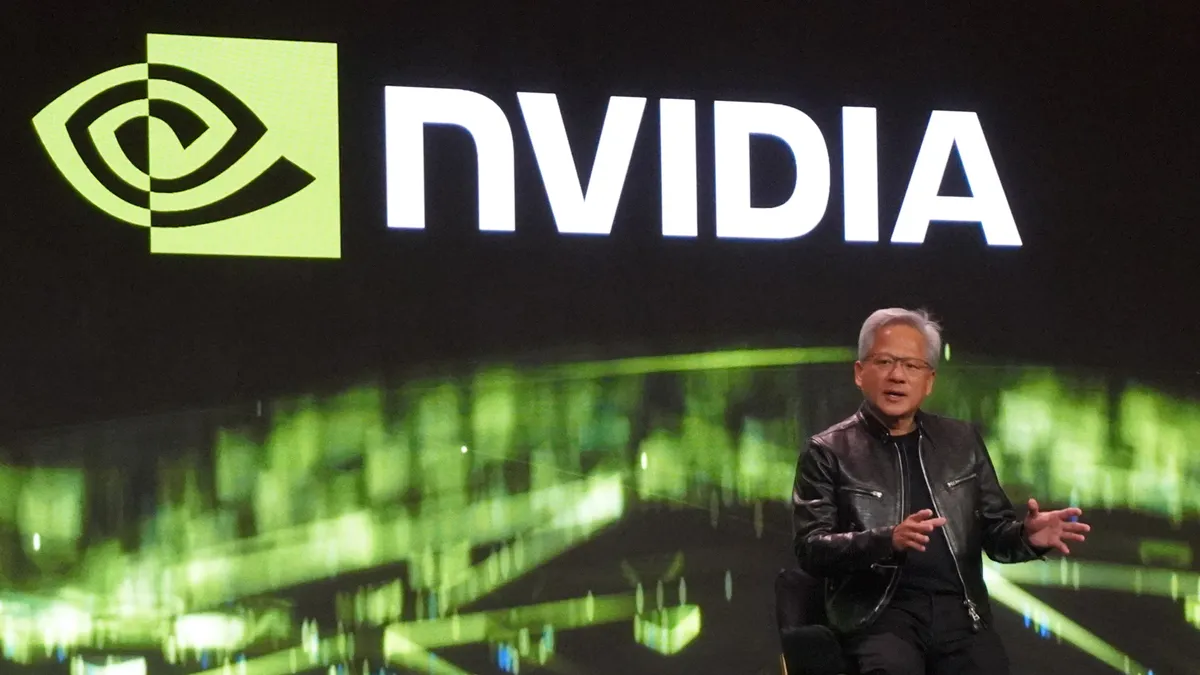
Nvidia's board has 11 members, including Huang, that are meeting today to consider whether to dismiss Jensen from his position following an internal investigation launched on November 8.
The ten other board members are independent and have the power to fire the CEO on the grounds of breaking the company's ethical standards. We are expecting a result to be announced later today on the verdict they've reached — even if that verdict is a further delay.
Is Jensen Haung getting fired today?
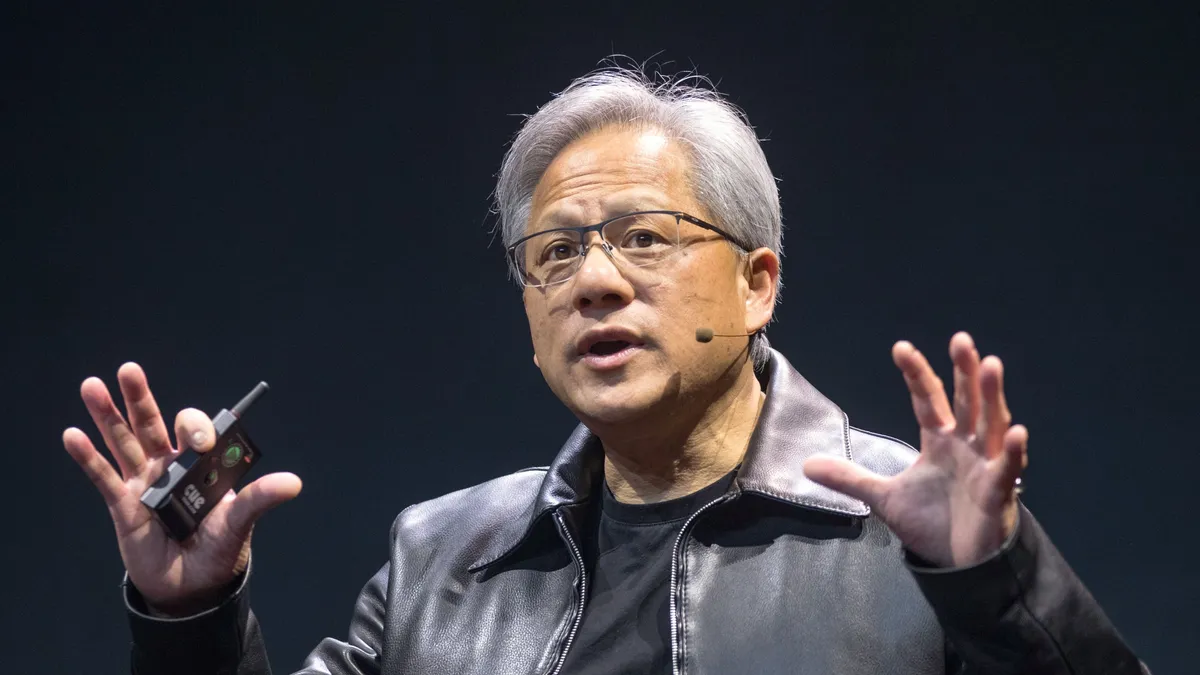
Quite possibly. According to an exclusive report from the Wall Street Journal, Nvidia's board "is preparing to oust CEO Jensen Huang" and that it would leave "one of the world’s most valuable companies in need of a new leader."
However, there's no immediate successor who could replace the leather jacket-wearing CEO who has become the face of the current AI arms race.
Dan Ives, a tech analyst at Wedbush Securities described Huang as the "central nervous system" of the U.S. technology ecosystem. Ives went as far as calling him "irreplaceable" and warned that losing him would disrupt not just Nvidia, but the broader tech ecosystem. According to Ives, should Huang leave Nvidia, his immediate exit could trigger a 25%–30% stock drop.
Jensen's only official statement (so far)
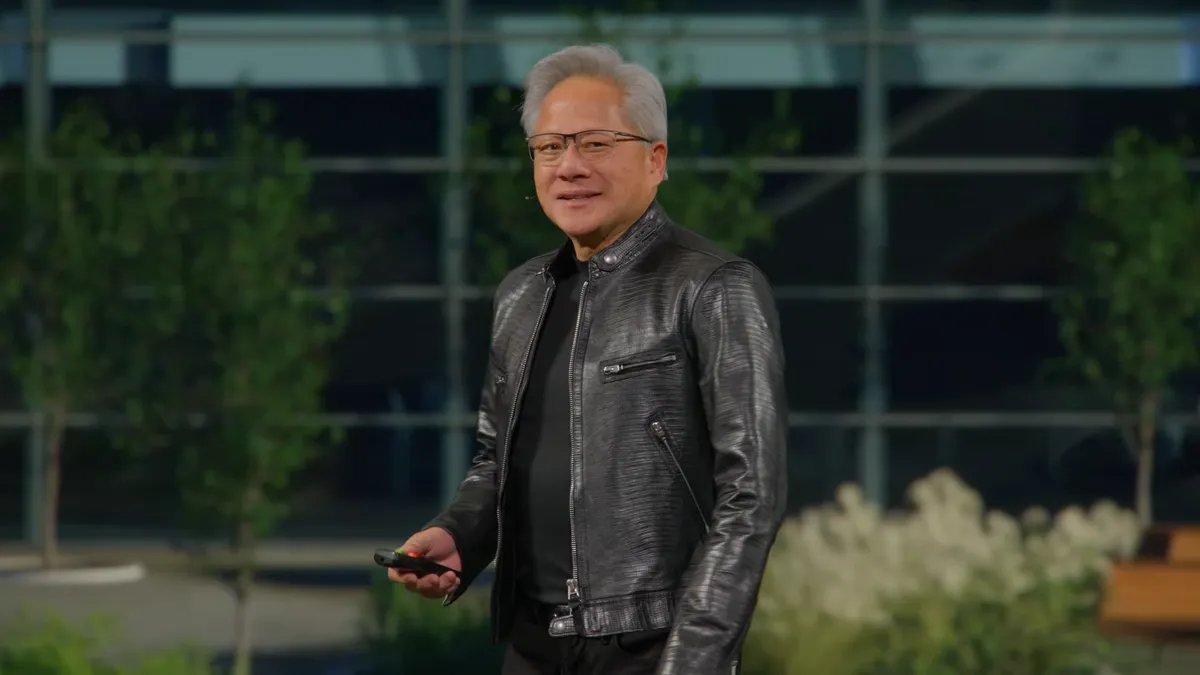
This saga hit critical mass when The New York Times published a report detailing a long timeline of Huang’s alleged affair with Alice Huang, a suspected Chinese spy.
Following this report, Jensen admitted to an affair in an internal email to his staff, and while he didn’t outright admit it was with Alice Huang, the fact he spent part of his statement talking about “national security concerns,” and that he’s “proud and grateful to be an American,” seems to connect the dots.
Here's his statement in full:
I owe my family and all of you an apology.
I was unfaithful to my wife. My actions hurt her and our children. There is no excuse for what I did. I am deeply sorry.
Throughout my life, my family has given me love and support. They deserve my honesty and loyalty. Instead, I let them down and damaged the life we built together. I take full responsibility for what I did and the hurt I caused, and I accept the criticism that comes with it.
To my wife and family: I love you. I know an apology cannot undo what I have done. I hope our family will heal and that, over time, I can earn back your trust.
To my colleagues at NVIDIA, including those I have worked alongside for decades, and to our board, partners, and shareholders around the world: you deserve better from me. Leading NVIDIA is the privilege of my life. My responsibility is to serve you and be worthy of your trust. I have fallen short of that responsibility. I am fully committed to NVIDIA and will work to earn back your confidence.
Regarding the national security concerns raised in news reports, NVIDIA’s Board of Directors has initiated an independent investigation. I support the investigation and will cooperate fully. I love our country and our company. I am committed to protecting NVIDIA and supporting America’s national security. I am proud and grateful to be an American.
My family bears no responsibility for my choices. I do. Please give them privacy.
Jensen
Huang's departure 'unlikely' to have immediate impact on Nvidia products

Nvidia operates a famously flat structure with Jensen Huang actively involved in the company's routine operations. That said, one analyst told me his departure today is unlikely to torpedo the company's current AI focus.
"A prolonged leadership crisis could also disrupt product development or investment, but I think Jensen Huang's departure is unlikely to have any immediate effect on the price or availability of Nvidia products," said Louise Wooldridge, Senior Research Manager, Games, Ampere Analysis.
"There is also the possibility that, if Nvidia's competitive position is weakened by Huang leaving, other chipmakers (like AMD) could gain an advantage, and this stronger competition could improve the landscape for consumers.
"Overall, though, I think the commercial incentives pushing Nvidia towards AI will remain, regardless of the leadership situation, and so it is more likely that little will change in the long run."
Breaking: Jensen Huang resigns

Jensen Huang has announced his resignation as Nvidia's CEO.
Colette Kress named Interim CEO of Nvidia
Nvidia has confirmed that, following Huang's departure, Colette Kress, current Executive Vice President and Chief Financial Officer will step into the role of Interim Chief Executive Officer.
"Kress will continue to serve as Executive Vice President and Chief Financial Officer while serving as Interim Chief Executive Officer until a permanent successor has been named," Nvidia said.
"The Board is initiating a search for a permanent Chief Executive Officer and will consider internal and external candidates."
Huang thanked for 'immeasurable contribution'

In a press release announcing Huang's departure, Colette Kress, Interim CEO and CFO of Nvidia said: "I am committed to building on the extraordinary foundation Jensen created over the last 33 years.”
“We will continue advancing the work that has made Nvidia a leader in accelerated computing and AI, and execute on the opportunities ahead. Our focus remains on serving our customers, partners, developers and shareholders.”
The press release ended by saying the Nvidia Board and the company "thank Jensen for his immeasurable contributions to the company and the industry."
Nvidia stock likely to fall further following Huang's exit

The market isn't going to officially open until 9:30 am, but Nvidia shares have already fallen 10% in U.S. premarket trading after Huang's exit was announced.
Nvidia is one of the "Magnificent Seven" tech stocks, along with the likes of Apple, Amazon and Alphabet, that collectively make up over 30% of the S&P 500. A lot of standard 401(k) plans are heavily weighted in index funds that are tied to the performance of these companies. So today's news could have a knock-on effect for a lot of people.
Who is Colette Kress?

So, who is the new Interim CEO of Nvidia? Colette Kress joined the company in September 2013 and is the executive vice president and chief financial officer. She has previously served nearly 25 years in a range of finance roles at major technology companies, including 13 years at Microsoft.
“Colette has helped lead NVIDIA through a period of extraordinary growth and has a deep understanding of our business, customers, operations and financial position,” said Harvey Jones, the newly-appointed chair of the Nvidia Board of Directors.
“She is supported by an experienced leadership team that has been instrumental in executing Nvidia’s strategy and advancing its technology roadmap. The Board has full confidence in Colette and the leadership team, and we expect the company’s operations, customer commitments and product roadmap to continue without interruption.”
US markets open with Nvidia price fluctuation

As U.S. markets open for the day, Nvidia's stock price is jumping up and down. I saw it open at 13% down before recovering somewhat to 8% down at the time of this writing but it's set to be a turbulent day for Wall Street.
Long-term implications for AI industry?

Nvidia is the lynchpin of the current AI boom and demand for its chips has seen the company become one of the most valuable companies in the world. Today's news isn't going to change that but with investor confidence in AI expenditure starting to waver, we could see some long-term fallout further down the line.
"In the near-term, I think Nvidia will continue to perform as usual. The fundamentals won't change for CY 2027 and potentially CY 2028. A lot of these deals and supply chain are already locked up, Ryuta Makino, software and semiconductor analyst at Gabelli Funds, told Tom's Guide.
"The longer-term, post Feynman is where I would watch for. So 2029 and 2030 are years that may be impacted more broadly. There is potential that this will lower AI infrastructure spend in the long-term given that Nvidia will likely lose market share.
"This can also mean that lower efficiency gains on these servers equals lower AI efficiency and therefore the entire ecosystem will be worse overall. I am still assessing the impact but there will definitely be a ripple."
Nvidia shares are now 6% down

While this is going on, we're keeping an eye on Nvidia's stock price as the market absorbs the news. Opening at 13% down — wiping more than half a trillion dollars off the company's market value — it now appears to be sitting at 6% down.
Nvidia is set to report its latest financial results next Tuesday.
'He had to go' — more reaction to Huang's exit

There's some stinging reaction to Jensen Huang's departure now coming through.
Writing on Substack, scientist Gary Marcus, stated bluntly: “He had to go. He enabled and even lobbied for Chinese AI, subverted US policy, and carelessly left himself vulnerable to both blackmail and espionage.”
"He also left Nvidia open to endless litigation and investigation, which is perhaps part of why they encouraged him to go, despite his enormous talents."
Kress has just sent an internal memo
Nvidia's new Interim CEO, Colette Kress, has just sent an internal memo to the company, as reported by Reuters:
“Dear NVIDIANs,
I believe deeply in this company and in its future. More than anything, I believe in each of you, in our customers and partners and in the vital role we play every day in the global economy. The Board, Estaff (Executive Staff) and I recognize that this has been an extraordinarily difficult period and I want you to know how grateful we are for your resilience, professionalism and continued dedication. Thank you. This company has achieved so much because of the work that all of you bring to it every single day. You are our greatest strength. You will hear more from leadership in the coming days about our future together, and we will host a company meeting on November 18 at 9am PT. We play a vital role in building the technology that is powering the AI revolution, and we have important work ahead of us. So let’s move forward together, with the same determination and commitment that have always defined this company.
Thank you for all you do,
Colette”
Harvey Jones also sent a memo

In that transition announcement, it was also noted that Harvey Jones, an Nvidia board member since 1993, has been appointed as the first chair of the company's board of directors.
Reuters also reports he sent a memo too:
"Dear NVIDIA Employees,
I am writing to share an important update. Jensen has resigned as CEO and Board Member, and the Board has asked our Chief Financial Officer Colette Kress to serve as interim CEO while it conducts a search for a permanent successor looking at both internal and external candidates. I will serve as the first-ever Chair of the Board.
As CFO for over 13 years, Colette has been a key architect of NVIDIA’s growth and capital strategy. She possesses a deep understanding of this business and the markets in which we operate. The Board has full confidence in Colette to deliver on our commitments to shareholders, customers, partners, and to each of you.
Jensen’s contributions to NVIDIA are profound. NVIDIA is one of the most consequential technology companies in the world. We pioneered accelerated computing, defined the modern GPU, and built the platform that powered artificial intelligence.
The Board takes seriously our duty as stewards of this great company.
The strength of this company resides in our employees, leadership team, technical strength and partner ecosystem. I am confident that under Colette’s leadership, with the full support of the Board, we will continue to grow our business, and lead the industry forward. Thank you for your focus, your professionalism, and your commitment to NVIDIA.
Harvey Jones
Chair, NVIDIA Board of Directors"
Welcome to the post-game analysis
So now we know the news — the world knows the news and the memes have been splendid. But the question on everyone's lips is a simple one: what happens now?
The AI bubble was starting to show cracks. Does this pop it? That's what we're going to analyze and see what happens.
Because you've got an equal amount of people saying "it's over," as saying "this won't change anything."
"I'd be more cautious": Expert analyst weighs in for Tom's Guide
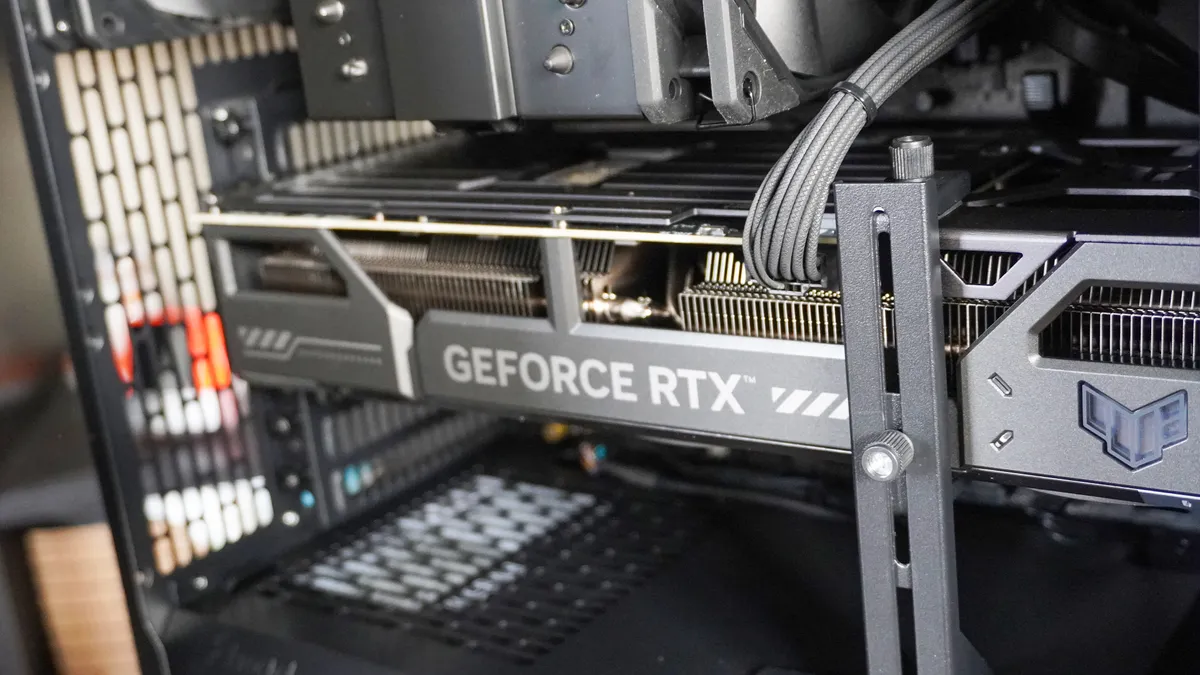
Kieren Jessop, Principal Analyst in Omidia's PC team has told Tom's Guide that "nothing will change for consumers next month," but warns that "I'd be more cautious about the next two to three years."
"Consumer is now a small share of Nvidia’s revenue, but strategically it’s the on-ramp: PC users and gamers are how a generation of developers got onto the platform.
Local AI inference on PCs is a growing workload, led by businesses that want sensitive data kept in-house, more predictable costs than per-use cloud pricing and lower latency, with consumers likely to follow later."
In Jessop's own words, Huang "treated that link as strategic," while an interim CEO from finance may be more "likely to focus on data center customers," which would mean "fewer new consumer initiatives."
"The exposed areas are the follow-through: Nvidia’s first Windows-on-Arm PC chip only reached laptops last month and still has software compatibility work outstanding, and the next GeForce generation has reportedly slipped to 2028.
Founders have come back before, Steve Jobs being the obvious example, Altman the more recent example, but whether Huang does is unknowable at this stage. Either way, the risk isn’t that Nvidia products get worse; it’s that fewer ambitious ones get launched while the question is open."
Wait...what!? Trump suggests Tim Cook replaces Huang as CEO of Nvidia

...yea I'm just as confused as you are. President Trump has just posted on Truth Social about who he thinks should be CEO of Nvidia next.

"In the near term, nothing changes."
We've got a reaction from Avi Greengart, expert consumer technology analyst over at Techsponential!
"In the near term, nothing changes for consumers because Nvidia’s GPU allocation is largely set — and data centers are still the priority, not gaming and client computing," Greengart commented.
"The bigger issue for consumers is the rise in cost of memory and storage due to the AI build out, and Nvidia doesn’t play a direct role there at all. But Nvidia really did run entirely through Jensen, so a change the top absolutely can affect the company’s strategy in the mid and long-term."
Putting these stock numbers into context

It's easy to talk so casually about stock prices in the percentage terms. Like "oh no, shares went down 10%," but what does that actually mean.
Well let me put some context to it.
Since the news of the first affair, Nvidia has lost $888 billion in market value so far.
That would be the equivalent of the following companies all going to zero overnight:
- McDonald's
- Starbucks
- Chipotle
- Yum! Brands (KFC, Taco Bell, Piza Hut)
- Restaurant Brands International (Burger King, Popeyes, Tim Hortons)
Is that all? No! Because it's way more than that. Nvidia lost double that amount over the past few days. So take the remaining $451 billion (roughly) and set it on fire, then you'll get what Team Green sank by.
Meanwhile, over at AMD...

I can only imagine it's been a four-day party for the company board and investors. They're up 5.7% today alone amidst Jensen's exit.
@WSJ Yiu can't do this to me. I build this company brick by brick. https://t.co/aDsipLBxEnNovember 12, 2026
There's been many AI-generated memes, but as a Spider-Man fan, this has to be my favorite!
"A watershed moment for Nvidia": more expert analysis
We have more analysis — this time from eMarketer senior analyst, Asa Hiken:
“Jensen Huang’s resignation is a watershed moment for Nvidia, which now has to prove it can maintain its AI dominance without the leader largely responsible for building it. And given the broader AI industry’s heavy dependence on Nvidia’s chips, Huang’s departure introduces uncertainty well beyond the company itself.”
“While Huang’s personal decisions are scandalous, his particular affair with an alleged Chinese spy raises much bigger questions about the security risks facing companies at the center of the AI race. AI technology has become critical to US national security, making even the personal relationships of industry leaders a potential vulnerability.”
More insight from Techsponential's Avi Greengart

"Jensen was also AI’s chief cheerleader with global politicians; without him we’ll see how Nvidia manages Trump’s last two years in office and increasing tensions with China and Taiwan.
Nvidia under Jensen was also a key funder for the circular ecosystem of AI foundation model makers, hardware and networking gear, and deployment partners that supercharged datacenter growth.
The interim CEO was the CFO for these deals, but Jensen signed them, and a new CEO may take a less aggressive approach, especially with pressure against data centers becoming a major political issue and investors worrying about a bubble."
Does Nvidia exit the gaming market?

As we're hearing from experts, nothing will change in the short-term. But panic is setting in among PC builders on socials that Nvidia might take this leadership vacuum as an excuse to abandon GeForce entirely.
Because the numbers unfortunately back-up a pivot if someone financially-minded was to take a look. Gaming makes up 7.4% of Nvidia's total revenue.
Once they became the picks and shovels company for the AI gold rush, it was no longer a gaming company; it became a data center company.
And as PC Gamer points out, "Nvidia would be foolish to put more focus on gaming hardware while the AI cash cow continues to provide."
While he became the AI kingmaker, Jensen Huang was also integral to the growth of PC gaming — no matter how you swing it. Now he's out, and with an Interim CEO in town, this could change.
How will the U.S. government react? And what will it do to the AI bubble?
We're starting to see reactions from Washington, and they all seem to be unanimous: strong chip export controls are needed — not just on the physical chips but on access to remote cloud compute.
And if that happens, the global total addressable market (TAM) of the silicon providers gets locked down, and the sudden drop would impact the big three memory makers (SK Hynix, Micron, Samsung).
My prediction if this happens: Wafer capacity is rebalanced in the face of this reduced capacity, and the valuation of AI changes significantly. That doesn't mean immediately lower prices on consumer PC hardware, as a lot of these costs are locked in. But the money has to come from somewhere.
