If you've been watching the news, you may have seen the Trump administration's recent robotic ban. In a move by the Federal Communications Commission (FCC), the ban targets any new foreign-made humanoid robot imports to the U.S. The thinking is that these products may cause "unacceptable risks" to U.S. security.
But humanoid robots aren't the only robots at risk. It turns out the ban spreads much further than you might think. Far enough to spell trouble for the kind of 'bots you may be using in your own home.
Delve a little deeper into the FCC's definition, and you're looking at a much larger coverage of robots that fall under the term "advanced robotic devices".
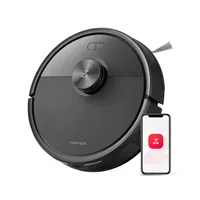
If they're "capable of locomotion, obstacle avoidance, navigation, or movement on the ground" then they're targeted under the new ban. Sounds a lot like robotic lawnmowers, the best robot vacuums or even your friendly neighborhood delivery robot, right? Exactly.
No more Roombas?

Any new 'advanced robotic devices' being imported are banned, which essentially means any robots manufactured outside of the U.S.
Now, it's worth delving into exactly what this means for home and delivery robots that fall under the FCC's definition.
Importantly, any existing robots previously authorised to be sold in the U.S. are safe. Equally, any robots that have already been imported from outside of the U.S., are currently being sold, or have been approved are also safe.
But any new "advanced robotic devices" being imported, which essentially means any robots being manufactured outside of the U.S., are banned.
This includes robots where "the combined weight of the device and, if applicable, ground station or docking station is over 4.4 lbs", as well as any with "software running either locally or remotely, including firmware and AI or machine-learning model weights" and "a sensor capable of perceiving its environment" or "a component that is capable of providing network connectivity (wired or wireless, including Bluetooth/Wi-Fi, cellular, or satellite)".
Why? Well, as the FCC has said, they consider these robots to pose a national security risk, stating: "foreign-produced advanced robotic devices could be weaponized to directly harm U.S. national security and U.S. persons".
But what's really interesting is what it's demanding companies do instead.
Safety concerns?

A lot of companies like Roomba, Ecovacs, Dreame, Roborock and more source manufacturing from China. Moving forward, they'll need to acquire waivers to continue to manufacture and sell these advanced robotic devices in the US. But, The Verge revealed the FCC doesn't want to ask any questions about actual security.
Instead, the site reports: "The FCC only wants to know where they're designed and made and assembled and tested and influenced, and get a specific commitment to start manufacturing them in the U.S. instead."
So, for now, existing robots in the U.S. are safe. You won't have to hand over your much-loved robot vacuum to security. But it's a huge deal for the companies making them. Any new models will need a waiver to be manufactured elsewhere, and if they can't get the waiver, then they won't be getting sold in the U.S.
If you were on the fence about picking up one of the best robot vacuums or a robotic lawnmower, you might want to act sooner rather than later.
CTA responds
The Consumer Technology Association, the organization behind CES, also issued a measured response on X in a series of posts.
At CES 2026, robotics took center stage. Innovation in this space is accelerating fast, and the U.S. must lead the world in developing and deploying these technologies. 🧵July 30, 2026
"At CES 2026, robotics took center stage. Innovation in this space is accelerating fast, and the U.S. must lead the world in developing and deploying these technologies."
"CTA supports efforts to protect our national security and strengthen technology supply chains. But those policies should be targeted, transparent and focused on genuine security risks, not unnecessary costs or supply chain disruption."
"The global race in robotics is on. CTA looks forward to working with the Administration to ensure America leads the world in robotics and the next generation of emerging technologies."
"We encourage continued engagement between industry and government to ensure policies advance trusted supply chains while preserving innovation, competition and consumer access to new technologies."
Companies respond
We reached out to a number of companies following the FCC's announcement. Here's what they had to say.
Anker Innovations
"We are aware of the FCC’s recent update. Based on our current understanding, the new rule does not affect the continued availability, use or support of products we currently sell in the United States. Those products remain available and will continue to receive updates and customer support.
"Like others across the industry, we are seeking further clarity on how the rule will be applied to future products, and we will keep our customers informed. We remain committed to complying with all regulatory requirements in every market where we operate."
Dreame
"We are currently reviewing and assessing the details of the recent announcement," a spokesperson said. "Dreame has always been committed to strict compliance with all local laws and regulatory requirements in every market where we operate globally."
iRobot (makers of Roomba)
"We are aware of the FCC's recent action and are working with them to better understand its implementation and potential impact. We remain committed to serving our customers and will share updates as more information becomes available."
Segway Navimow
"We are aware of the FCC’s announcement regarding restrictions to advanced robotic devices. There is no immediate impact to existing Navimow customers, as all Navimow models currently sold in the US have already received FCC equipment authorization. The ban does not affect the sales, service, or continued use of existing products. We are closely monitoring policy developments and evaluating compliance pathways for future products, including the Department of Defense's "Conditional Approval" process."
What do you think of the ban? Let us know in the comments.

Follow Tom's Guide on Google News and add us as a preferred source to get our up-to-date news, analysis, and reviews in your feeds.
More from Tom's Guide