Club Benefits





I bought my dehumidifier in a mad panic after arriving home from vacation to find water leaking through my ceiling. But now, I don't know what I'd do without it. Dehumidifiers can be useful for everything from preventing mold to drying wet laundry, and if you buy the right one, you won't even notice as it sucks all that moisture out of the air.
But, while they look pretty similar, not all dehumidifiers are worth the investment. That's why we spent hours testing the best dehumidifiers in real-life damp basements and moldy bathrooms, measuring everything from noise level and ease of emptying to how quickly they can bring the humidity level in your home down to a manageable level. I know first-hand that dehumidifiers can be panic purchases, but if you buy well, your home will see the benefit almost instantly.
Best overall

Dan put the dehumidifier to the test in an extremely humid basement bathroom and laundry room. While other dehumidifiers of this size and stature generally take about 45 minutes to an hour to get the humidity level down to 35%, the GoveeLife Dehumidifier brought the humidity down to 35% in just 34 minutes.
Similarly, the dehumidifier performed well in a large space (about 700 square feet), taking just 10 minutes for the humidity level in the room to drop 10%.
Dan found the app simple, intuitive, and fuss-free. You can control the dehumidifier from other rooms in the house, and the app works with Google and Alexa too, so if you want to set up those features, you can even control the dehumidifier from outside your home.
Despite its impressive power, there were a few downsides. Unlike the Honeywell dehumidifier, this is a very noisy machine, which can be irritating, especially if you work from home. Dan also found that it throws off a good bit of heat, which is fine in cool spaces and in winter but could make smaller spaces or areas very warm.
However, if you simply want a powerful and intuitive dehumidifier that can quickly extremely damp basements or large spaces, the GoveeLife Smart 50 Pint Dehumidifier is Dan's top choice.
Read the full GoveeLife Smart 50 Pint Dehumidifier review
Best budget

Despite its name, Dan's tests found that this compact appliance can hold about 24 pints of water, although this is still relatively small compared to others on the list. Ultimately, this dehumidifier has a very user-friendly design which couldn't be more compact to store.
Dan found that this is a standout for storage. This dehumidifier can be ‘nested’ into itself so it takes up half of the space, so it's perfect for small basements, laundry rooms, or home offices.
This dehumidifier is easy to use, too. Once connected to its app, you can monitor it from your phone, including viewing the humidity levels and receiving alerts when the bucket is full. Dan's tests showed that you can change the settings remotely too, adjusting the speed of the fan with three levels to choose from. On top of that, you can control it with your voice via Alexa or Google Assistant.
It's slower than the GoveeLife dehumidifier but it gets the job done and proves to be a useful asset when dealing with a damp basement. It’s also incredibly easy to empty, as the lower half turns into a bucket and handle.
All in all, this is a simple, budget-friendly, effective dehumidifier.
Read Dan's full Midea 20 Pint Cube Dehumidifier review
Best for large spaces

If you're after a dehumidifier to handle a big room, the Frigidaire 50 Pint will get the job done.
Dan put it to work on the largest, most humid room in the house: the basement. With a size of around 1,000 square feet, the initial humidity level was around 50% to start. Dan was impressed that the Frigidaire dehumidifier got the humidity level to 35% in just 20 minutes. In fact, all of the humidity measurements on the unit matched up almost perfectly with Dan's Alexa air quality monitor.
Dan ran the same tests in the basement bathroom, and the Frigidaire 50 Pint Dehumidifier was able to bring down humidity levels from 90% to 35% in just forty minutes, which is faster than other dehumidifiers Dan tested.
The only downsides Dan noted are its size, hefty weight (it's 41 pounds), and noise levels. If you're after handy smart features, this isn't for you, because it doesn't have an app. Unlike the dehumidifiers above, you can't operate this appliance from your phone. If you need something smart, you need the Midea or GoveeLife dehumidifiers above.
However, it's simple to operate, and it pulls a lot of moisture very quickly. It's all you really need to handle extremely damp basements or spaces.
Read the full Frigidaire 50 Pint Dehumidifier review
Best for flooding

The Amazon Basics 35-Pint dehumidifier may be basic, but Dan was impressed. He particularly liked its performance in midsized rooms with high levels of dampness.
Dan found that it worked quickly and efficiently to control humidity in spaces up to which measures about 900 square feet. However, it was overkill for any space under 600 feet or so, and threw out a lot of heat.
Despite its 35-pint capacity, it is quite large and heavy to lift. Luckily, the unit is mounted on casters, which makes it easy to move around on the floor. Its six-liter bucket also slides out easily from the front of the unit and includes a handle to make it easy to empty.
Like the Frigidaire above it doesn't come with an app, but the buttons on the top of the unit allow you to power it on, make the adjustments you’ll need and are straightforward to use.
Another downside is it was the noisiest of the all the models Dan tested. It reaches a whopping 70 decibels, so you can't run it while you work from home. However, it consistently and quickly removed humidity in large, damp spaces.
Read the full Amazon Basics 35-Pint Dehumidifier review
Also tested
Dan tested a wide selection of dehumidifiers, but despite doing a decent job, not all of them made it to his final cut. In case you still can't find a suitable one for your needs, you may want to check out these below.
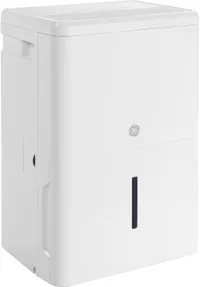
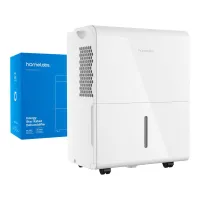
Comparison chart
| Row 0 - Cell 0 | Floor area (Square Foot coverage) | List price | Capacity (pints) | Drainage type | Digital controls |
Midea 20 pint cube | 1,500 Sq. Ft | $178 | 20 | Passive | Yes |
Honeywell TP50AWKN | 4,000 Sq. Ft | $419 | 30 | Passive | Yes |
Frigidaire FGAC5044W1 | 4,500 Sq Ft. | $379 | 50 | Passive | Yes |
Amazon Basics 35 pint | 2,500 Sq Ft. | $179 | 35 | Passive | Yes |
How we tested
Our testers
Why you can trust Tom's Guide Our writers and editors spend hours analyzing and reviewing products, services, and apps to help find what's best for you. Find out more about how we test, analyze, and rate.

Dan is the former technical editor for VeloNews Magazine, who currently reviews electric bikes, bike lights, and other bike accessories for Tom's Guide. In addition to VeloNews, his work has appeared in Triathlete Magazine, Rouleur Magazine, CyclingTips.com, Road Bike Action, Mountain Bike Action, CycleVolta.com, Tomsguide.com, and much more. Dan also hosts two podcasts on his site, Slow Guy on the Fast Ride: One is about cycling and other outdoor activities, while the other looks at mental health issues. Most recently, Dan also covered the 2022 Tour de France. Dan lives outside of Denver, Colorado with his family.
Emily Long is a Utah-based freelance writer who covers consumer technology, privacy and personal finance for Tom's Guide. She has been reporting and writing for nearly 10 years, and her work has appeared in Wirecutter, Lifehacker, NBC BETTER and CN Traveler, among others. When she's not working, you can find her trail running, teaching and practicing yoga, or studying for grad school — all fueled by coffee, obviously.


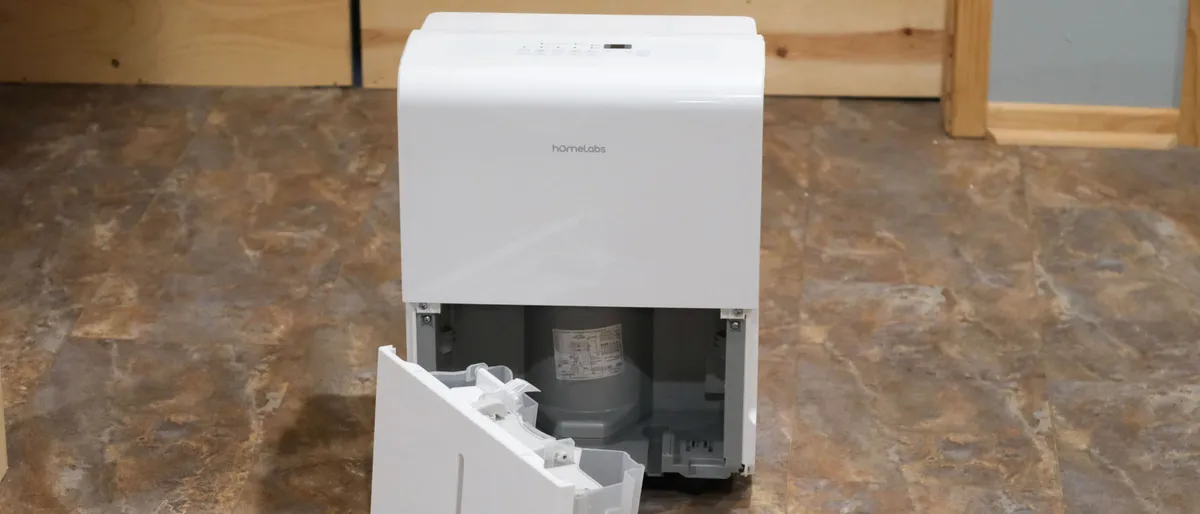

First, Dan researched the top picks that are currently on the market to determine the best dehumidifiers on the market. This included top-selling and highly reviewed machines on popular retailers like Amazon, Best Buy and The Home Depot.
The chosen selection of dehumidifiers were then subjected to hands-on, extensive testing in the same environment. Dan spent weeks testing these dehumidifiers in damp environments like their basement, kitchen and other areas that were prone to high levels of humidity.
To evaluate how well the dehumidifier works for every situation and space, Dan looked at the following things:
Set up and ease of use:
Dan looked at how easy it was to set up the dehumidifier in your space. How heavy is it move around? How many pints does it have? And does it have useful features such as wheels or a carry handle at the top for better portability? He even looked at the length of the power cable and whether it would be convenient for many households.
Dan also considered how easy it was to maintain the dehumidifier and to empty out the water bucket. If the model had an included drain hose or built-in pumps, Dan looked at how efficient it was when draining moisture into sinks. In addition, how easy is it to clean afterwards and replace the filter.
Design and features:
Dan analyzed the overall design and whether its size was suitable for the space. He then looked at notable features such as LCD display , touch screen controls or remote control. Dan considered whether it had settings like an auto-off feature, timer, frost control sensor, and auto-restart, and evaluated smart or app capabilities such as voice control. What's more, Dan noted if the app was easy to use and intuitive, and if there were any pairing issues.
Performance and efficiency:
As part of his testing, Dan ran the hot shower/faucet for about five minutes in the bathroom, kitchen and basement to get the room up to 90% humidity. Once the dehumidifier was turned on, it was left to run for under 12 hours each day over a few weeks.
Dan then timed how long it took for the dehumidifier to reduce humidity to the level set and total runtime for the day. For instance, the Honeywell 50 Pint dehumidifier (and Dan's winner!) took less than an hour to reach 35% humidity, the fastest of all the models. Dan also recorded the daily average and total runtime for over a week. For accurate readings, Dan compared the humidity of his space with against an Amazon Alexa air quality monitor.
In addition, Dan monitored how many watts of power the dehumidifier used while it was running with the fan on high, and with the fan turned off. This helped us to determine total consumption and how energy-efficient the dehumidifier was. Other issues noted were discrepancies between the built-in humidistat readings and separate Alexa air quality monitor levels, any leakage issues, as well as noise levels.
How to buy the best dehumidifier
There are a huge range of dehumidifiers on the market. Before choosing your favorite, here are a few factors you should consider:
Type
There are different types of dehumidifiers on the market. The most common type is a condensing dehumidifier, which pulls the absorbed air over refrigerated coils, which cools it enough the condense and separate the moisture.
Other types include desiccant dehumidifiers, which will use a water-absorbing material, and thermoelectric dehumidifiers, which operate with charged plates. Generally speaking, neither of these latter two types are as effective as condenser models, which is why Dan only recommends this type in his list.
Capacity
Dehumidifiers generally come in three sizes: large (45-50-pint capacity), medium (30-pint capacity) and small (20-22-pint capacity).
Under the old regulations, these sizes were 70, 50 and 30 pints, respectively, and you'll see such numbers with three older models above.
Noise level
If you’ll be placing a dehumidifier in a quiet room, such as a bedroom or home office, where you need to fall asleep or concentrate without being disturbed, consider the noise level of the dehumidifier before you buy. Aim for a dehumidifier with a decibel level of around 50 decibels or below, anything above this level will be louder.
Features to look out for
Pint capacity — The capacity in pints relates to how much moisture the dehumidifier claims to absorb per day. The bigger the capacity, the larger and damper space it can handle.
Bucket size — Pint capacity shouldn’t be confused with bucket size however. This specification indicates how much the internal bucket can actually hold before it will need to be emptied. The larger the bucket, the less often you will need to empty it.
Drainage type — On this list you will find passive and pump drainage types. Passive types let you passively drain the water through a hose, or alternatively you can manually carry and empty the bucket yourself. Whereas pump drainage types will automatically pump the water out. Pumps are preferred as the water doesn’t need to rely on gravity alone to drain, so you can direct the hose into a sink or out of the window. However, these models do cost more than without.
Energy Star Certification — It’s always useful to look out for Energy Star Certification as this guarantees savings in terms of energy and money.
Humidity sensor — With a humidity sensor, your dehumidifier will detect relevant changes in the atmosphere and can automatically switch on and, in some cases, set its power accordingly. Those without a sensor will just be manually controlled.
Frost sensor — A frost sensor will detect the formation of ice on the condenser coils. The dehumidifier will then shut off the compressor to give the ice a chance to melt. If it continues to run with frost on the coils, this can damage the parts and make the appliance work much harder to absorb any moisture.
Auto restart — If the dehumidifier suddenly loses power, auto restart means it will automatically switch back on to its previous settings once power is restored.
Number of speeds — This relates to how many speeds the fan has on the dehumidifier. The more speeds there are, the better as it gives you greater control and means excess energy isn’t wasted.
If you're still unsure, check out these things you should know before buying a dehumidifier and how to avoid these 7 common dehumidifier mistakes.
Where is the best place to put a dehumidifier?
Ideally, a dehumidifier should be placed in the centre of a room to work efficiently. This allows the air to circulate properly around the unit.
Generally, a dehumidifier can dry out a room between 24 and 72 hours. But this depends on whether the room is large or has high humidity levels, which would take up to weeks to dry out.
For more top tips, check out our guide to the best place to put a dehumidifier.