







Buying the best cooler could dictate whether a summer BBQ is a triumph or a lukewarm tragedy. But given the similarity in looks and specs, it can be tricky to know where to start when selection the right model for you and your household.
Whether you’re planning a cross-country road trip, a weekend at the lake, or just trying to keep the drinks frost-bound during a backyard blowout, the stakes in 2026 are higher than ever. It’s no longer just about who can hold the most ice; it’s about who can hold it the longest, withstand a literal bear attack, and maybe even offer a specialized "dry zone" for your sandwich, all while being light enough to lug across a soft-sand beach.
Cooler manufacturers make some pretty big claims, and at Tom's Guide, we like to test them IRL. That means every cooler featured in this guide has been carefully vetted by our expert reviews team, evaluated for ease of use, design extras, and of course, how long they'll keep a can of soda perfectly chilled.
Our top pick for 2026 is Ninja's FrostVault Cooler, which held its own against alternatives from the likes of Yeti in our testing. But, if you're looking for capacity on a budget, we'd recommend Coleman's Classic Cooler. For our testing results, and more top picks, keep on reading.
Best overall


The Ninja FrostVault Cooler is the star of the show. It kept cans perfectly cold for eight whole days, with ice only melting after five. Although that's one day less than Ninja's claim, our tester, Ashley, was still impressed, as five days should be enough for most trips. We think this is down to the heavy-duty, three-inch thick insulated walls, which does make it heavy to carry. However, the 'all-terrain' wheels and handle make it easy to tow around, especially when it's full. And the handle tucks neatly into the cooler when not in use.
We tested the 45-quart cooler that fits up to 68 cans, but you can also choose between a 30-quart or 65-quart model.
You'll find a dry storage drawer at the bottom of the box. It can get cold, but doesn't come into contact with ice, and can be used to store anything that isn't wet. There's also a locking mechanism that keeps the drawer in place when you're on the move. And you'll find a drain at the bottom of the box to empty out the melted ice.
Our expert reviewer, Ashley, described the cooler's performance as "short of astounding" and was impressed by its capacity and amazing ice retention. It's not a budget buy, but what you get is a high-performing cooler that won't let you down when you're out on your next big adventure.
Read our full Ninja FrostVault Cooler review
Best budget


The Coleman Classic Cooler is relatively cheap for its size, and apart from storing your catch or cans, it will double up as a seat. It doesn’t quite stretch to Coleman’s claims of staying cool for five day (if you don't open the lid), but it will keep your food and drink chilled for 48 hours. Erin, our tester, said that after 20 hours days all the ice had melted, and by day four it had reached room temperature.
You’ll find the exterior is hard and sturdy, so it will withstand the rigors of being transported in the back of a truck, while at 31 inches long, you’ll be able to pack in a plentiful supply of provisions.
It’s also roomy enough to act as a seat, and four cup holders are embedded in the lid, so you can chill out while out on your adventure without worrying about your beverages toppling over. There’s also a fish rule for those competitive fishing trips.
Opening and closing the lid is tricky to master, and the 70-quart model doesn’t come with wheels, but for durability and capacity, you get a lot of bang for your buck. We think it’s a great budget buy, offering lots of capacity at an exceptional price, and its ice retention will keep your items cool for a weekend trip.
Read our full Coleman Classic Cooler review
Best portable


The Coleman Snap ‘N Go stands out for its portability. Coming in at 20 pounds empty, and its collapsible design makes storage straightforward even in cramped spaces. We found it simple to fold down and stash away in a car trunk or closet, a real advantage for anyone tired of wrestling with rigid boxes.
In our real-world testing, the Snap ‘N Go managed to keep drinks chilled for 30 hours with a full load, cans and ice packed as for a long picnic. Against the Ninja FrostVault, which offers about 120 hours of ice retention at the cost of extra bulk, the Snap ‘N Go is easier to lift and fit into tight spots, though it can’t match the FrostVault’s multi-day chill.
With three available sizes (35, 45, and 55 quarts), the Snap ‘N Go covers most group needs, though it is heavier than the Engel Cooler or the Yeti Hopper when empty. Its larger capacity means you can pack for a bigger outing without bringing a second cooler, and you can fold it away when finished, unlike most hard coolers.
Portability isn’t perfect. Even collapsed, the cooler is long and awkward to carry by yourself. Reviewer Erin noted that carrying it loaded up a flight of stairs was a two-person job, and the lack of wheels means you’ll want help if it’s packed full. However, if you're looking for something to throw in the car for vacations or camping trips, it could be a real space-saver.
If you’re seeking an easy-to-store cooler and don’t need multi-day ice retention, the Snap ‘N Go is a smart fit. Its unique collapsible build makes it ideal for space-limited homes or vehicles. Just be ready for some awkwardness if you plan to haul it solo or over long distances. Rival models like the Ninja FrostVault are better for marathon chilling, but the Snap ‘N Go wins on stow-and-go convenience.
Read our full Coleman Snap 'N Go review
Best wheeled cooler


The Yeti Roadie Cooler gets a thumbs up from our tester, Erin, who says it’s expensive for a reason. It’s incredibly well-made, easy to latch and unlatch and the wheels are stable. Plus, the handle is smooth to extend and retract.
But before we get carried away, we need to consider the cooler’s ice retention capabilities. Well, it scored well there, too. It kept ice-cold for over three days, and we’d recommend it for weekends away and even 3+ day camping trips.
Erin tested the 32-quart model, but you can purchase anything from 15 quarts to 60 quarts. And there was no doubt about the Yeti Roadie’s stand-out feature. She was bowled over by the wheels, which kept the cooler steady even over rough cobbles. Although one downside is that it doesn’t have carry handles, for when you want to lift the cooler up or down steps, whether at the beach, or in and out of your own apartment.
Its looks are also something to behold, and there’s a decent color choice to choose from — making it a pair of wheels to be proud of.
Maintaining the Yeti Roadie is simple. The internal space is easy to wipe clean, and the drain plug at the rear allows the melted ice to escape. You can also purchase a plentiful supply of accessories, including cool dividers, reusable ice packs, and cup holders.
Read our full Yeti Roadie Cooler review
Best for day trips


Because of its small capacity and compact dimensions, we recommend this budget pick for days out, rather than weekends away. When our reviewer, Erin, tested it, she found the Engel Cooler keeps drinks cold for over 24 hours, and cools them for up to 48. And although it doesn't have wheels, she liked its sturdy handle, which makes it easy enough to carry about.
What's more, if color is your thing, you won't be short-changed. We tested the white version, but I have my eye on the Coral colorway, which is just one of 14 options. I may have to start a collection!
Despite its small size, it's surprisingly spacious, and our reviews team was able to fit in cans and a big bag of ice, with space to spare. They also found it lightweight to carry, which is a big win when you're carrying swimming gear, sun cream, and a whole host of other paraphernalia to your picnic spot.
However, if this 19-quart model is too large for your needs, you can downsize to the seven-quart or 13-quart version. Whereas, if you need more storage, you can up the capacity with the 30-quart model, although none of the models come with wheels.
Apart from offering excellent cooling properties, it doubles up as a dry box for fishing trips or beach parties.
Read our full Engel Cooler review
Best soft cooler


We don’t always want a hard-cased cooler to take on trips, and that’s where Yeti’s Hopper comes in handy. It’s a premium cool bag with soft edges, and although it’s not a backpack, you can pick it up and go.
Erin tested the Yeti Hopper 15, with 15 quarts of capacity, but if you want more space, the M20 provides 20 quarts. However, choosing this soft cool bag isn’t a cheap option, and it’s pricier than many hard coolers.
So, what makes this soft cooler worth the price? Erin thinks the design is exceptional and values the options of hand or padded shoulder straps, which help to soften the load when the cooler gets heavy.
However, her favorite aspect is the magnetic snap opening, which Yeti refers to as ‘MagShield’. It’s almost impossible to open it without pulling on a tab, which gives you peace of mind that the cold won’t escape.
Inside, you’ll find a lining similar to those found in lunch bags, which is constructed using “closed-cell foam”, and Yeti says it’s mildew-resistant. It also proved to stay cool for 48 hours — that’s pretty impressive for a soft cooler.
Read our full Yeti Hopper review
Best lightweight


The Igloo Marine Ultra Cooler looks smart and plays smart. We tested the 54-quart model, which can hold 76 cans, and it maintains a low temperature for multiple days (although not quite four days as claimed).
Weighing in at 5 lbs, it’s lightweight as coolers go, freeing up your muscles to carry all those cans. Andfive pounds, it’s light in weight and low in price. You also get some handy extras, including cup holders on the lid and a fish ruler to measure your prize catch.
Although it can’t be used as a dry box, as it doesn’t have a sealed gasket ring, it does have a drip tap, which makes emptying the cool box super easy once all the ice has melted.
We also found this Igloo cooler pretty easy to move around, and despite it missing out on a set of wheels, its dual handles make it possible for two people to carry.
Although we had a few issues with opening the latch with one hand, as it appeared stiff, overall, this cooler does offer a lot for the money. However, because the ice retention was short of what Igloo claims, we think its best for for short getaways, rather than long breaks.
Read our full Igloo Marine Cooler review
How we test the best coolers

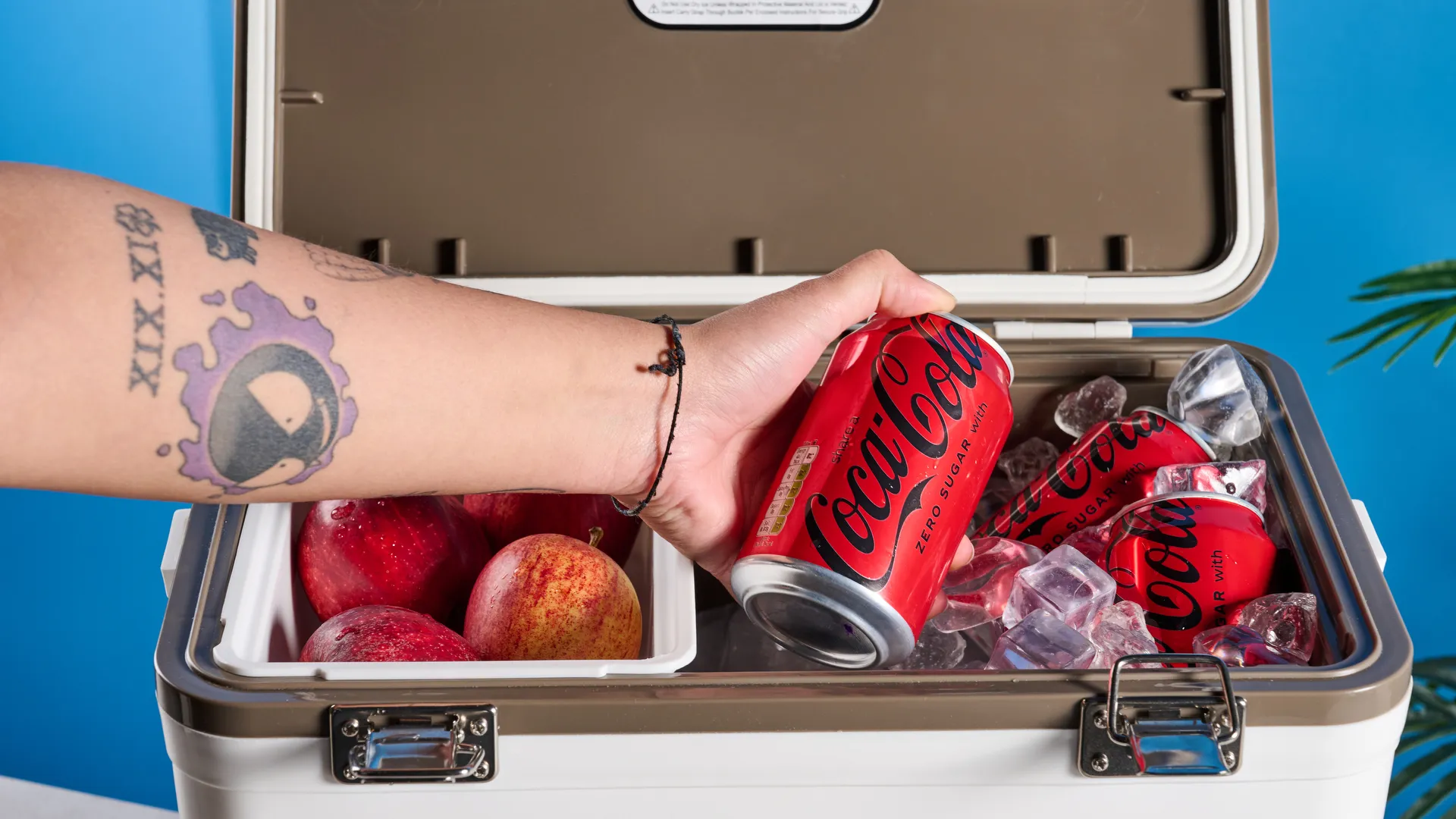
Before we called in the best coolers to test, we conducted extensive research to find the most highly rated coolers on the market. This involved researching other competitor websites, checking the products for consistent ratings, and reading user reviews to discover the pros and cons of each.
We also looked at a cross-section of coolers to test, with premium, mid-range, and budget options and basic models for those with extra features, such as dry storage compartments and drink holders.
The models we shortlisted have all been highly recommended, and once called in for testing, have been put through their paces by our reviews team.

Ice retention
Why you can trust Tom's Guide Our writers and editors spend hours analyzing and reviewing products, services, and apps to help find what's best for you. Find out more about how we test, analyze, and rate.
One of our main tests is to check the manufacturer’s ice retention claims — after all, this is the main reason for investing in a cooler. We start by filling the cooler with ice (the amount will depend on the cooler’s capacity). We then check back to see how long the cooler stays chilled, and record how long it takes the ice to melt completely.
We complete a similar test by placing cans inside the cooler (here, again, the amount depends on the cooler’s capacity). A can is removed every two2 hours (although not overnight), and we record when the cans no longer feel chilled.
| Row 0 - Cell 0 | Claimed ice retention |
Actual ice retention |
Ninja FrostVault Cooler |
6 days |
5 days |
Coleman Classic Cooler |
5 days |
20 hours |
Coleman Snap 'N Go |
2 days |
30 hours |
Yeti Roadie Cooler |
3 days |
3 days |
Engel Cooler |
2 days |
16 hours |
Yeti Hopper Cooler |
2 days |
2 days |
Igloo Marine Ultra Cooler |
4 days |
2 days |
Further tests
Apart from ice retention, we look at other aspects of each cooler, including:
Capacity: Does it hold the number of cans claimed, and is it easy to pack? Does it offer any added flexibility with dry storage or separate compartments?
Portability: How easy is it to carry, does it have wheels, carry handles, or a pull-along handle?
Weight: Does the weight cause an issue if the cooler is on the heavy side? Does the cooler compensate by having wheels?
Durability: How sturdy does the cooler appear? Will it withstand tough adventures, or is it more suitable for lunchtimes in the park?
Price: Is the cooler worth the price tag? Do you get a lot for your money, or is it premium without the functionality you would expect?
Ease of use: Is it easy to open the lid? How do the clasps/fasteners work? Are the handles comfortable to hold?
After making all the observations above, we only add products to the best coolers buying guide we recommend.
How to choose the best cooler
How to choose the best cooler for you

Before you choose a cooler, you must consider its size. Size ultimately affects the portability. On top of that, you need to decide on the external material — whether you want a hard or soft case. If you need to carry it for extended times, opt for soft, but if you want one for large get-togethers, or you need durability, a hard case would be best.
Portable vs. non portable: If you don’t plan to move your cooler once it’s placed, then you don’t need to worry so much about its portability. But, if you’re planning to take it on vacation or on road trips, then consider how much it will weigh at full capacity and whether you will be comfortable carrying it. You may want to consider a cooler with wheels.
Durability: The latches must seal securely and shouldn’t ease up when travelling. The cooler won’t be able to insulate effectively if the seal is broken.
Insulation: You want your cooler to be effective at insulating, so it keeps its contents chilled for as long as possible. The performance in this can vary — some models will keep ice frozen for up to a week, while others will only last a day.
Extra features: If you want the latest features and you’re happy to pay for it, look out for external storage compartments, cup holders, bottle openers and even umbrella holders. There are also models available which offer bike attachments.
Cooler FAQs
What size cooler do I need for a day trip, weekend camping trip, or road trip?
Choose a cooler based on how many people you are packing for, how long you will be away, and whether you are carrying mostly drinks or food as well. A small, easy-to-carry model suits a day out, while a weekend trip for a small group generally calls for more capacity; the guide suggests around 50–60 quarts for a couple of days away.
Remember that a larger cooler takes more ice and becomes much heavier when full. If you will need to move it regularly, a wheeled model or two smaller coolers may be more practical than one oversized box.
Which brand makes the best coolers?
No single brand makes the best cooler for every buyer. In this guide’s testing, the Ninja FrostVault is the best overall choice for strong cooling performance and useful storage, while Coleman offers a better-value, high-capacity option and Yeti stands out for premium build quality and specialist designs.
Choose the brand after deciding what matters most for your trip. Ninja suits buyers prioritizing ice retention, Coleman is worth considering for capacity on a tighter budget, and Yeti has strong wheeled and soft-sided options. Compare the specific cooler’s size, weight, features, and tested performance rather than relying on brand alone.
Should I buy a hard-sided or soft-sided cooler?
Buy a hard-sided cooler for longer trips, larger loads, and maximum ice retention; choose a soft-sided cooler when lighter weight and easier carrying matter more. Hard coolers are usually the better fit for car camping, road trips, and group gatherings, but they take up more space and can be awkward to lift when full.
Soft coolers work well for day trips, beach visits, and shorter outings where portability is the priority. The guide’s Yeti Hopper pick is an example of a soft model designed for carrying comfort, while the hard-sided options offer more capacity and longer-lasting chilling.
Is a wheeled cooler worth it?
A wheeled cooler is worth it if you need to move a large, fully loaded cooler over relatively smooth ground. Wheels and a pull handle can make a high-capacity model far easier to manage on campsites, paved paths, and from a car to a picnic spot.
They are less useful on deep sand, steep steps, or very rough terrain, where you may still need to lift the cooler. Check the wheel stability, handle design, and overall weight as well as capacity. The guide recommends the Yeti Roadie for buyers who want a particularly capable wheeled option.
How long should a cooler keep ice?
A good cooler should keep its contents chilled for the length of your trip, but ice retention varies widely by design, size, conditions, and how it is used. In the guide’s testing, the featured models range from shorter day-trip performance to several days of ice retention, with the Ninja FrostVault keeping cans cold for eight days and ice lasting five days.
Use manufacturer claims as a starting point, not a guarantee. Warm weather, frequent lid opening, warm food and drinks, and an underfilled cooler can all shorten performance. Pre-chill the cooler and its contents, pack it well, and keep the lid closed whenever possible.
How much ice do I need to put in a cooler?
As a general starting point, use about two parts ice to one part food and drinks by volume, then adjust for your trip length, the weather, and how often you expect to open the lid. More ice and fewer air gaps usually help a cooler stay cold for longer.
Pre-chill food and drinks before packing, and use a mix of larger ice blocks and smaller ice to fill gaps if practical. Keep perishable food safely chilled and follow food-safety guidance; the exact amount of ice needed will vary with the cooler’s size, insulation, and conditions.
How can I keep my cooler cold for longer?
Pre-chill the cooler and everything going inside it, pack it as full as possible with ice, and keep the lid closed except when you need something. These steps reduce warm air entering the cooler and help its insulation work more effectively.
Keep the cooler out of direct sun where possible, drain excess water only when the manufacturer advises it, and separate frequently used drinks from food if you can. For longer trips, choose a model with ice retention that matches your plans rather than expecting every cooler to perform for several days.

