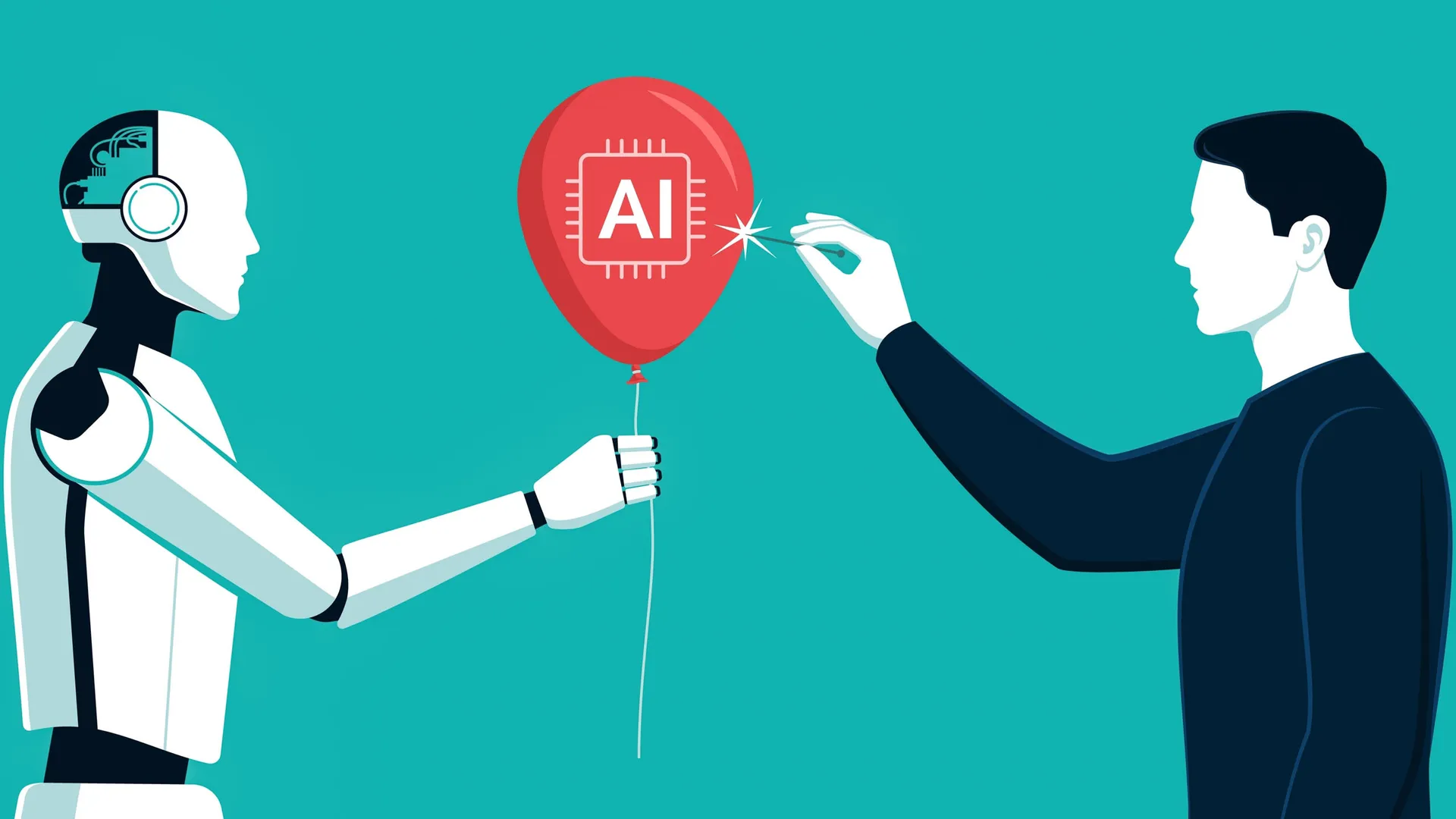
With the ongoing “RAMageddon”, the rapid development of data centers and the pure vitriol brought against “AI slop” these days, I can see why AI skeptics are hoping for an AI industry market crash.
Once the news of China’s AI sector suffering a massive market crash that wiped out $480 billion reached my timeline, I started thinking about the possibility of that event coming to fruition in the US. There’s been so much speculation over the very existence of an AI bubble, when it could finally burst and what could happen to the several US sector & the tech itself if a crash took place.
Since I’m so prone to asking the likes of ChatGPT, Gemini, Claude and Perplexity hot-button questions, I knew it was time for me to see what they thought about those three topics. So I brought this loaded set of questions to their attention: “Is there really an AI bubble? If so, when is it going to burst and what will happen if it does?
Here are some of the most intriguing responses each chatbot gave me, with one of them even drawing comparisons between a possible AI market crash and the infamous dot-com crash from 2000 to 2002.
ChatGPT’s answers
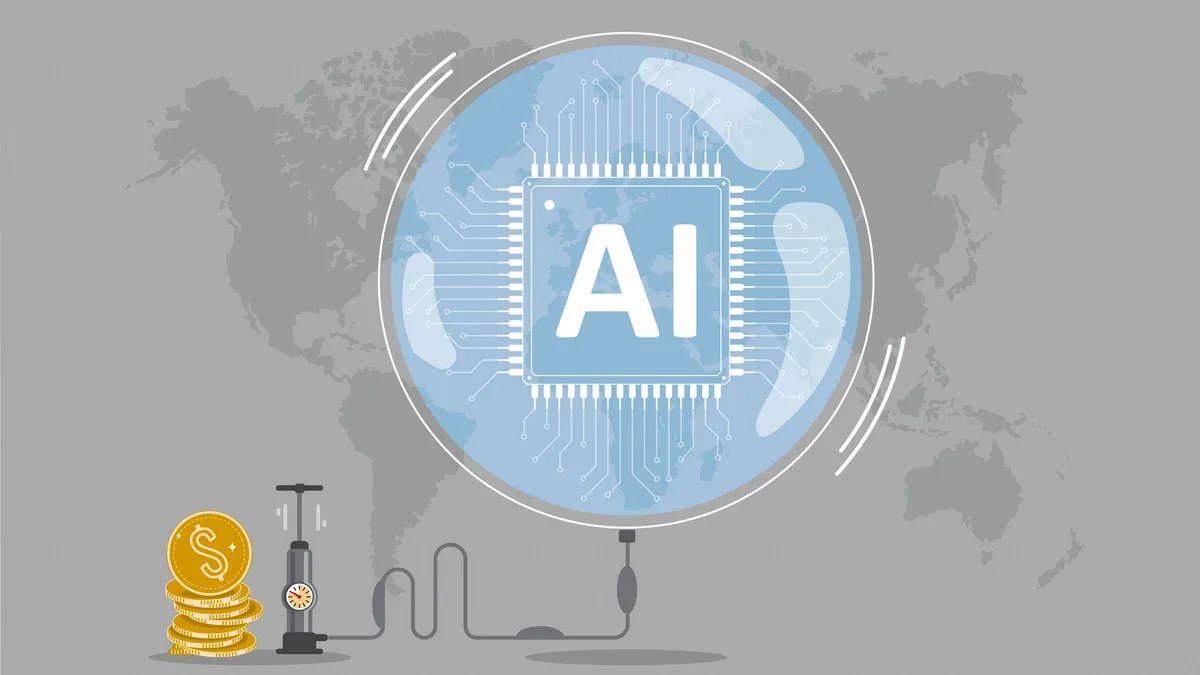
OpenAI’s chatbot was first up at bat for my latest inquisitive session about AI. It made sure to point out that there are clear signs that there is an AI bubble and that parts of it may be on the verge of popping. But it also noted that an AI crash isn’t such a sure bet:
Yes, there are credible reasons to worry that parts of the AI industry are in a bubble — but that doesn't mean AI itself is a fad, or that a crash is inevitable. The most useful way to think about it is to separate two questions:
- Is AI valuable? AI tools can already help people write, code, analyze information, automate tasks and create content.
- Are investors paying too much for AI? Potentially. Companies can be building genuinely useful technology while investors simultaneously overestimate how quickly it will generate profits.
That distinction is important because the dot-com boom of the late 1990s offers a useful comparison: the internet transformed the economy, but many internet companies still failed when their valuations outran their businesses. The AI industry could experience something similar — a correction in investment and valuations even as the technology continues to improve.
As for when the AI bubble could burst, ChatGPT stated that no one can reliably predict its occurrence. The main scenario it alluded to as the worst one was set from 2027 through 2029, as it explained how a serious reckoning could come to pass if its revenue for the AI industry fails to keep up with the infrastructure spending from private sectors going into it. Or if customers discover that AI delivered less measurable value than they originally expected.
To wrap up its investigation into the matter, ChatGPT stated that the central question at the heart of the AI bubble-bursting topic is whether the money it generates can eventually justify the money that’s being spent on it. If yes, then it noted that this current AI investment boom will be looked back on as an expensive yet productive period of technological development. If no, then AI investors, startups, lenders and workers could be dealt a very bad hand while the technology itself continues to advance in some way.
Gemini’s responses
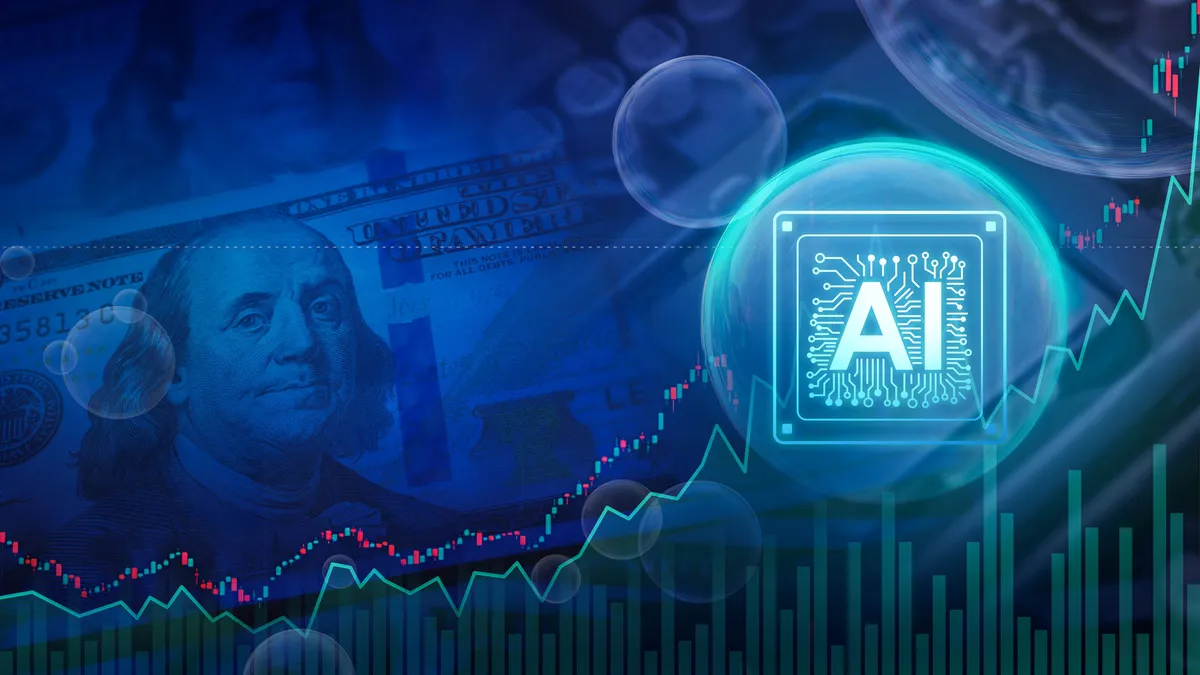
As I went through Gemini’s detailed breakdowns of its explanations to my questions, its comparisons to the dot-com crash and the AI bubble possibly bursting caught my attention the most. It pointed to three ways in which both events share striking similarities:
- The Infrastructure Overbuild ("The Dark Fiber Parallels"): In the late 1990s, telecom companies laid millions of miles of fiber-optic cables anticipating immediate Internet bandwidth demand. The demand took years to catch up, causing widespread telecom insolvencies. The massive build-out of GPU clusters and data centers mirrors this dynamic: if software adoption lags, massive compute capacity will sit underutilized.
- Circular Revenue Feedback Loops: Just as dot-coms spent venture funding buying advertising from Yahoo or servers from Sun Microsystems, modern AI startups often spend their funding directly on cloud credits and GPU compute leased back from their own venture sponsors.
- Narrative Overreach: Both booms were predicated on a real technological revolution. In 2000, the internet truly was the future, but early timeline expectations were wildly compressed. AI is similarly a genuine general-purpose technology, but monetization in day-to-day enterprise workflows takes longer than financial markets price in.
Gemini also made sure to point out a key difference between the fallout of the dot-com crash and the possible AI bubble finally bursting. It acknowledged that several dot-com firms ceased to exist after the dot-com crash, while the AI bubble bursting wouldn’t be too catastrophic for some of the tech leaders backing the tech, since they have other worthy investments (Amazon with e-commerce and Microsoft with software as a service, for example).
While those companies would face some financial struggles from the AI bubble bursting, Gemini noted that a complete shutdown of their businesses due to it happening wouldn’t likely occur.
Claude’s reply

Anthropic’s chatbot dived into the possibilities of an AI bubble existing by detailing why everyone’s so worried about it bursting, why an AI bubble may not fully exist at the moment and a possible timeline for when it could burst:
- Why people worry: The spending is enormous. Meta, Microsoft, Alphabet, and Amazon are on track to spend at least $700 billion in 2026, roughly 80% more than 2025’s record, which works out to about 2.2% of GDP from those four companies alone. AI investment also accounted for most US GDP growth in early 2026, so a large share of the economy now depends on this one bet. Prominent figures are uneasy. Ray Dalio says his bubble indicators put US stocks near their 2000 and 1929 levels, and Jamie Dimon has also voiced concern.
- Why it may not be a full bubble: The big players are financially strong. By one measure, hyperscalers carry less than $0.10 of net debt and lease obligations per dollar of equity, compared with nearly 0.6 for the rest of the S&P 500. Demand also looks real. Moody’s believes AI demand substantially exceeds supply, and power shortages will keep capacity behind demand through 2027. That is very different from dot-com companies with no revenue.
- When might it burst?: No one knows. One advisory firm’s best guess is 2027, and Capital Economics also expects a correction in AI-linked stocks. The trigger people mention most is interest rates. Economist Ruchir Sharma notes that past bubbles have all collapsed when rates rose, and even small hints of hikes could end this one. Other possible triggers: disappointing returns on AI spending, trouble in the credit market and cheaper competition (for example, from Chinese AI models).
Perplexity’s reactions

Perplexity’s response to my questions stated that there are notable signs of an AI bubble bursting, but those same signs don’t fully paint the picture of the AI industry being close to a crash:
There are credible signs of an AI investment bubble, especially in parts of startup funding and infrastructure spending—but that does not establish that the entire industry is overvalued or that a crash is imminent. Nobody can reliably tell you when it will burst, or whether it will end in a sudden crash rather than a long, uneven adjustment. The biggest distinction is between a stock-market bust and a debt crisis: both could hurt, but the latter would spread much further through the economy.
To back up its reasoning, Perplexity brought up a report from The Olympian that offers debates about the existence of an AI bubble. It also mentioned a report from a prominent management consulting firm to provide an assessment of when the possible AI bubble could burst:
- Is it really a bubble?: My assessment is that “pockets of speculative excess around a real technology” is more defensible than either “it’s all fake” or “there’s nothing to worry about.” A report published October 2 likewise describes disagreement among experts, including the view that there are pockets of bubbles rather than one industry-wide bubble destined for a violent pop.
- When would it burst?: A specific year or month would be speculation. Even a correct judgment that investments are overpriced does not provide a reliable crash date. Oliver Wyman explicitly leaves open both when a downturn might occur and whether it will occur at all. The dangerous combination would be disappointing earnings, spending cuts, and credit problems arriving together. One disappointing product launch or a falling stock price would not, by itself, establish that the whole boom was unraveling. The relevant indicators are earnings, cash flow, capital-spending sustainability, and financing conditions.
The takeaway
With shocking news hitting my timeline about AI investments going bad, it’s easy to envision a world where the AI bubble finally bursting comes to pass.
With Google’s recent massive loss of $500 billion due to its AI search feature disrupting ad sales, the odds of that aforementioned event taking place are getting higher and higher. All four chatbots do agree that there are sectors of the AI industry that are in danger of collapsing, while Gemini highlighted the clear comparisons between the AI bubble bursting and the 2000s dot-com crash.
After comparing ChatGPT, Gemini, Claude and Perplexity, I walked away from my latest chatbot questionnaire session knowing that the AI industry shows signs of plunging badly. But as for when that moment could take place, no one truly knows.

Follow Tom's Guide on Google News and add us as a preferred source to get our up-to-date news, analysis, and reviews in your feeds. Subscribe to Tom's Guide on YouTube and follow us on TikTok.
More from Tom’s Guide
- Hackers breached 25 servers, including U.S. government-linked systems — and AI tools may have helped
- ChatGPT, Gemini and Perplexity are getting election facts wrong — and a new study shows why
- Sam Altman says your laptop RAM is a 'terrible’ allocation of scarce resources: Why I think the AI bubble is about to prove him wrong