Club Benefits





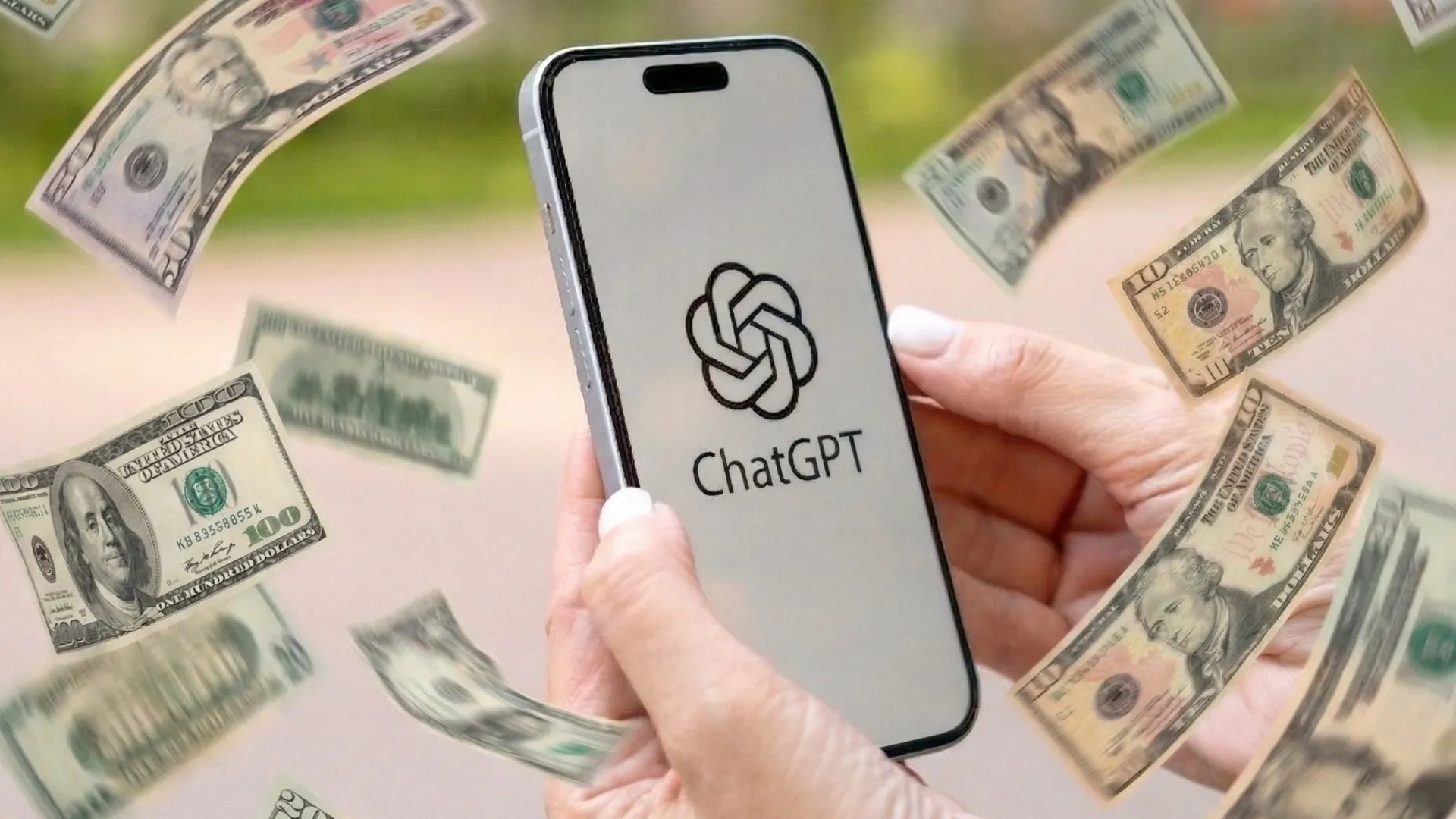
Companies like OpenAI, Google, Anthropic and Meta are spending billions of dollars on specialized chips, sprawling data centers and teams of researchers racing to build ever-more-powerful AI systems. Some estimates suggest training a frontier model can cost hundreds of millions of dollars before a single user ever types a prompt.
And yet, anyone can open ChatGPT right now and start using it for free. That seems like a contradiction, if you ask me. So, if AI is so expensive, why aren't these companies charging everyone from day one?
The answer reveals a lot about how the AI industry works — and why some of the biggest tech companies in the world are willing to lose enormous amounts of money today in pursuit of something much bigger tomorrow.

The short version: ChatGPT is free because OpenAI believes the users it gains today could be worth far more in the future.
Building habits for free, turning them into billions
Most people think of ChatGPT as a product, but OpenAI sees it as a platform. In other words, the company's goal isn't simply to convince you to ask a few questions or generate a realistic image. It's trying to become one of the default ways people interact with computers, search for information, write documents, learn new skills and increasingly complete real-world tasks. I won't go as far as to say Big Tech wants to get you addicted to AI, but I'm also not not saying it.
I am saying that the free version of ChatGPT acts as a giant marketing engine. Every free user is a potential subscriber, and at the scale OpenAI operates, even a small percentage of upgrades can generate billions of dollars in recurring revenue.
The strategy isn't new. Look at Instagram, TikTok, Spotify, or even Gmail and countless other platforms who've used the same playbook. Give people something useful for free, let them build a habit around it and offer premium features for those who want more. The difference is that the stakes in the AI race may be much larger.
The cost of competition

One of the biggest reasons ChatGPT is free is that the AI industry is currently fighting a battle for relevance. OpenAI, Google, Anthropic, Meta and others are all competing to become the name people think of when they think about AI. This matters because technology habits are incredibly difficult to change.
Many people still use the same search engine, email provider and cloud storage platform they adopted years ago. Once a service becomes part of someone's daily routine, competitors face an uphill battle convincing them to switch.
And, well, the companies building AI know this. Every free user represents another person learning how to rely on a particular platform. The more people use it, the more likely it becomes that they will continue using it in the future.
Seen through that lens, free access isn't generosity. It's customer acquisition. Or, put another way: it's the cost of competing.
The scale effect
Another reason free access works comes down to the unusual economics of software. Building a frontier AI model requires massive upfront investment. Training runs can consume enormous computing resources and take months to complete. But once the model exists, serving additional users becomes far less expensive.
Every conversation still costs money. AI models require servers, electricity and ongoing maintenance. But the cost of answering one more question is dramatically smaller than the cost of creating the model in the first place.
That's important because it means OpenAI doesn't have to recover billions of dollars from every individual user. Instead, it can spread those costs across hundreds of millions of people and multiple revenue streams.
Software companies have relied on this basic principle for decades: huge upfront costs, relatively small costs for each additional user.
Free users are the focus group
When you use ChatGPT, you're helping OpenAI understand how people actually use AI. Every prompt, follow-up question, thumbs up and thumbs down provides signals about what works, what doesn't and what users want next. In fact, just this morning, OpenAI contacted me about this story to do a deeper investigation. And while I appreciate that identifying and investigating the platform's weaknesses hopefully means less users will get scammed by AI, I'm just one person. The real point here is that no internal testing team could replicate the variety of questions asked by hundreds of millions of people around the world.
In a market where model quality is one of the biggest competitive advantages, those insights are incredibly valuable. But, who is paying for all of this?
The real cost of 'free'
Millions of users now pay for AI such as Google's new premium AI plans that offer access to more advanced models, higher usage limits and additional features. But despite having nearly a billion users, only .3% pay for ChatGPT.
Sure, businesses pay to access AI models through APIs and build them into their own products, enterprises purchase company-wide deployments and developers pay to integrate AI into apps and services. Of course, investors continue to fund the gap between today's costs and tomorrow's expected profits.
But those using the free chat window are the ones truly paying for all of this. The biggest opportunity for AI is when it becomes the infrastructure layer that powers everything else. That's why OpenAI continues to add more apps into their hub — designed to make it easy to use ChatGPT in conjunction with brands and companies you already use.
ChatGPT ads have arrived
For years, OpenAI resisted the traditional ad-supported model of Big Tech. But the staggering financial reality of running frontier AI models has forced a inevitable shift.
OpenAI has officially launched its self-serve ChatGPT Ads Manager, rolling out sponsored links and product placements directly into the chat interface for Free and Go tier users. Placed strategically below responses, these highly targeted ads mean OpenAI is transforming from a pure software tool into a massive digital advertising network, built to directly rival Google and Meta.
TThe golden rule of the internet has always been: if you aren’t paying for the product, you are the product. With Meta, your attention is harvested to serve you ads. Originally, OpenAI’s twist was that free users acted as the R&D department —providing the invaluable training data and stress-testing needed to refine the model.
But with the official launch of the ChatGPT ad network, the line between OpenAI and traditional Big Tech has officially blurred.
Bottom line
No money leaves your bank account when you open ChatGPT and start typing. But free doesn't mean costless. It's a tale as old as time: companies provide free products because they expect something valuable in return — whether that's future subscriptions, product feedback, customer loyalty or market share.
In that sense, ChatGPT isn't free. Winning the AI race could be worth far more than the cost of giving it away.
Every free conversation is part of a much larger bet: that whoever becomes the default AI platform today could become one of the most important technology companies of the next decade.
Follow Amanda Caswell and stay ahead of the AI curve 
Follow Tom's Guide on Google News and add us as a preferred source to get our up-to-date news, analysis, and reviews in your feeds. Subscribe to Tom's Guide on YouTube and follow us on TikTok. Finally, you can visit our dedicated Tom's Guide Savings Squad hub for expert help on getting the best products for less.
More from Tom's Guide